A Reality Check on Midjourney’s Medical Imaging “Breakthrough”
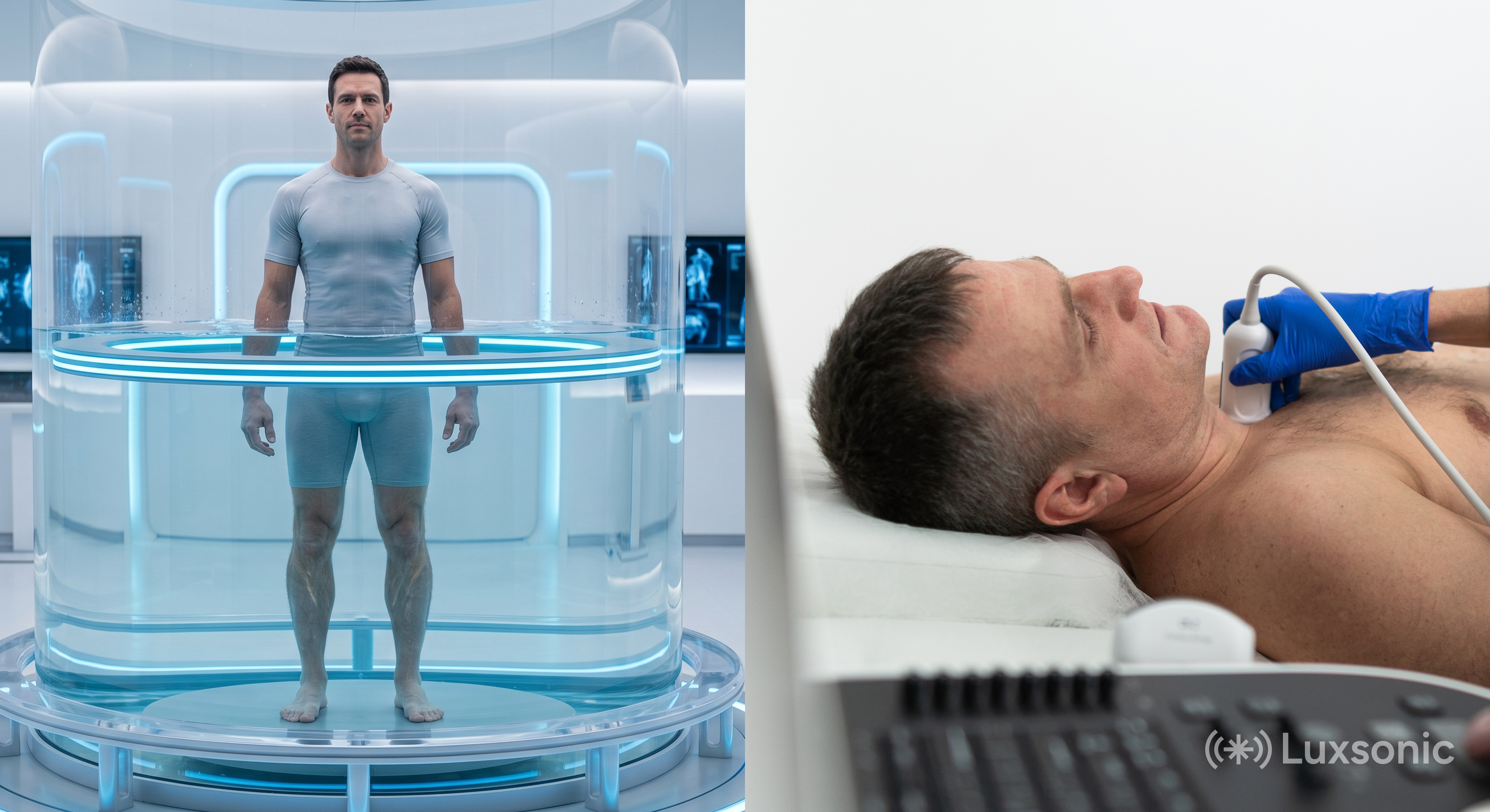
Midjourney’s latest medical imaging video is making the rounds on LinkedIn. The visuals are polished, the concept is compelling, and the narrative suggests a major leap forward. But beneath the surface, this is a familiar story in healthcare innovation. Impressive marketing built on technology that has been explored for decades. There is real innovation happening in this space. But it is important to separate what is technically feasible, what is clinically useful, and what is being presented as an inevitable future.
Jun 22 2026
Midjourney’s latest medical imaging video is making the rounds on LinkedIn. The visuals are polished, the concept is compelling, and the narrative suggests a major leap forward. But beneath the surface, this is a familiar story in healthcare innovation. Impressive marketing built on technology that has been explored for decades.
There is real innovation happening in this space. But it is important to separate what is technically feasible, what is clinically useful, and what is being presented as an inevitable future.
The Technology Is Not New
The hardware concept demonstrated in the video is called ultrasound computed tomography, which uses a ring array of transducers. This approach to volumetric imaging has been available in research settings for decades.
The idea of using a circular array for dynamically focused ultrasound was patented in 1974 by Albert Macovski at Stanford University under "Ultrasonic array for reflection imaging" (US3918024). The first real-time 3D ultrasound scanners were developed in the early 1990s through the research work of Olaf von Ramm and Stephen Smith, among others.
More recently, researchers from the Caltech Optical Imaging Laboratory published "Whole-Body Human Ultrasound Tomography" describing a working prototype that looks strikingly similar to what is shown in the Midjourney video. Their system uses a 512 element receiver array combined with a rotating transmitter to generate 2D cross sectional images, which are then reconstructed into a 3D volume.
The key point is not that the technology lacks merit. It is that the core challenges have been known for decades and are still being worked through today.
Hard Limitations in Physics Hamper Utility
The idea of a true full body ultrasound scan runs into fundamental physical limits that directly impact clinical usefulness.
The Lung Limitation Ultrasound waves don’t propagate through air effectively. When they encounter the lungs, there is a large acoustic impedance mismatch. The waves reflect at the surface, making it impossible to visualize internal lung structures or assess most pulmonary pathology.
The Cranial Limitation Imaging the brain presents a different problem. The adult skull significantly attenuates and scatters ultrasound waves. Even in specialized setups, it is not possible to achieve the resolution required for meaningful neuroimaging. A water bath configuration also introduces obvious practical constraints. It’s hard enough to get patients to lie still during an MRI, imagine asking them to stand still underwater wearing a snorkel.
These are not engineering problems waiting to be optimized away. They are fundamental physical constraints. Any claim of comprehensive whole body ultrasound imaging needs to be evaluated within that reality.
Ultrasound remains highly effective for specific soft tissue applications, but it cannot replace modalities like CT or MRI for complete diagnostic coverage.
Operational and Regulatory Barriers
Even outside of physics, there are practical reasons why these systems have not seen broad clinical adoption.
Clinical Utility Handheld and cart based ultrasound systems are widely used because they are flexible and operator driven. Clinicians can adapt in real time to the patient and the clinical question. Fixed ring array systems lack that adaptability, which limits their usefulness in many scenarios.
Workflow and Logistics Healthcare systems are already under pressure to improve throughput. Introducing large, specialized hardware with complex positioning requirements adds friction. Footprint, cleaning protocols, and patient handling all affect whether a system is actually deployable at scale.
Data Processing Requirements High resolution volumetric reconstruction from large arrays requires significant computational resources. This is an area where companies like Midjourney may differentiate, particularly with advances in AI and edge computing, but it remains a non-trivial challenge.
Regulatory Pathway Achieving FDA or Health Canada clearance for a new diagnostic workflow requires extensive clinical validation. This process takes years and demands clear evidence of safety and efficacy.
From an executive perspective, these factors translate directly into adoption risk.
The Current State of Clinical Care
To understand where this technology works today, it helps to look at systems that have already reached the market.
Companies such as Delphinus Medical Technologies with SoftVue, and QT Imaging Holdings with their Breast Acoustic CT system, have successfully developed and commercialized ultrasound tomography platforms using ring arrays.
Importantly, these are focused solutions that have successfully achieved FDA clearance. They are used for whole breast imaging, often as an adjunct to mammography in dense breast screening.
The distinction is critical. These systems solve narrow, well defined clinical problems. They do not attempt to replace comprehensive imaging modalities across the entire body.
The Wellness Loophole
One of the more interesting aspects of Midjourney’s approach is how they appear to be positioning the product.
Rather than entering the market as a diagnostic medical device, they're framing it within a consumer wellness model. The concept of “Midjourney Spas” that combine imaging with lifestyle services like saunas and cold exposure is a clear signal.
By focusing initially on outputs like body composition maps instead of diagnostic interpretations, they may be able to operate within a general wellness category. This delays the need for full regulatory approval and reimbursement alignment.
From a business standpoint, this approach allows companies to generate early revenue, build brand awareness, and collect data while deferring the cost and timelines associated with clinical validation.
We're increasingly seeing these types of strategies from tech companies in other areas of digital health, where wellness positioning serves as a bridge toward eventual medical use. Think smart watches.
What Healthcare Leaders Should Focus On
For healthcare executives evaluating technologies like this, the key question is not whether the concept is interesting. It is whether it is deployable and valuable within a clinical system.
A few practical filters:
- Clinical validation Has this been shown to improve outcomes in peer reviewed studies?
- Workflow integration Does it simplify care delivery or introduce additional complexity?
- Economic model Is there a viable reimbursement pathway or a clear cost justification?
- Comparative advantage What does this do better than existing modalities like CT, MRI, or conventional ultrasound?
Innovation in healthcare is not defined by what can be demonstrated in a controlled environment. It is defined by what can be reliably implemented at scale.
The Dangers of Marketing Hype
Midjourney may ultimately navigate these challenges and bring a meaningful product to market. That remains to be seen.
What is clear today is that the current narrative is being driven more by presentation than by clinical readiness. This is a case study in how AI generated visuals and strong storytelling can shape perception well ahead of underlying validation.
There are real risks to this dynamic. It can create unrealistic expectations among patients, distort how non-specialists interpret emerging technologies, and divert attention and capital from solutions that are closer to clinical impact.
It also carries a longer-term cost. When highly visible claims fail to materialize on expected timelines, trust in the broader healthcare innovation ecosystem is affected.
From my perspective, this is less about a breakthrough in imaging and more about a shift in how healthcare technology is being marketed and consumed.
There is no question that advances in AI, reconstruction algorithms, and hardware design will continue to push this field forward. But near-term expectations of frictionless, full body ultrasound diagnostics should be approached with caution.
Final Thought
The gap between what can be visualized and what can be validated is where most healthcare innovations succeed or fail. I'm curious how others in radiology and health system leadership are evaluating these kinds of announcements, especially as the line between clinical innovation and consumer wellness continues to blur. Would love to hear from others.
First Published on LinkedIn